Every student learns differently.
That simple observation has shaped the way we teach since Nereids was founded.
This page explores the ideas, principles, and beliefs that continue guiding our approach to learning, confidence, and water safety today.
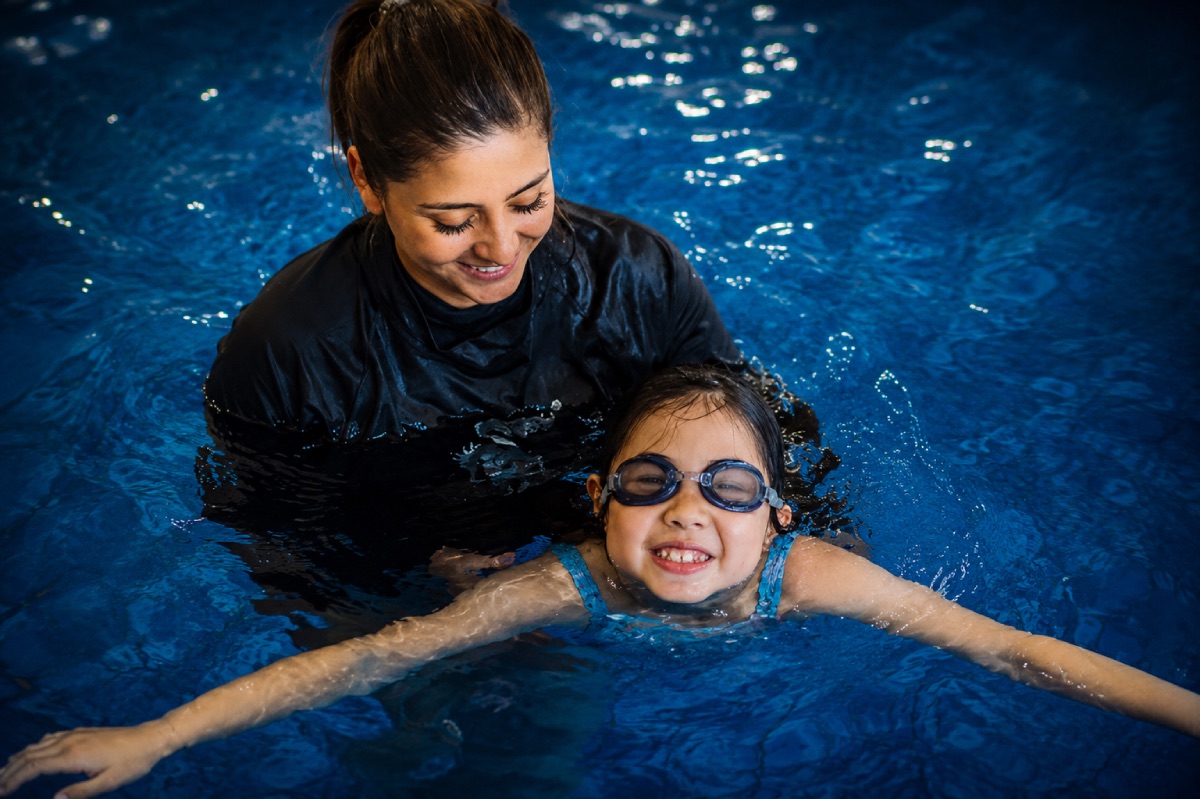
Before We Teach Swimming
Have you ever noticed that two people can receive exactly the same instruction and respond completely differently?
One child learns by watching.
Another learns by doing.
Some adults gain confidence very quickly, while others may need a little more time, patience, and encouragement before everything begins to click.
Over the years, teaching thousands of children and adults has shown us something simple but important:
No two students are exactly alike.
Each person arrives with different experiences, different strengths, different goals, and a different relationship with the water.
That is why our philosophy has never been built around fitting students into a system.
Instead, we believe the most effective learning happens when teaching adapts to the individual.
When students feel understood, progress often becomes more natural.
Confidence grows more easily.
And learning becomes something people genuinely enjoy.
Because before we teach swimming, we first seek to understand the person standing in front of us.
Everything else grows from there.
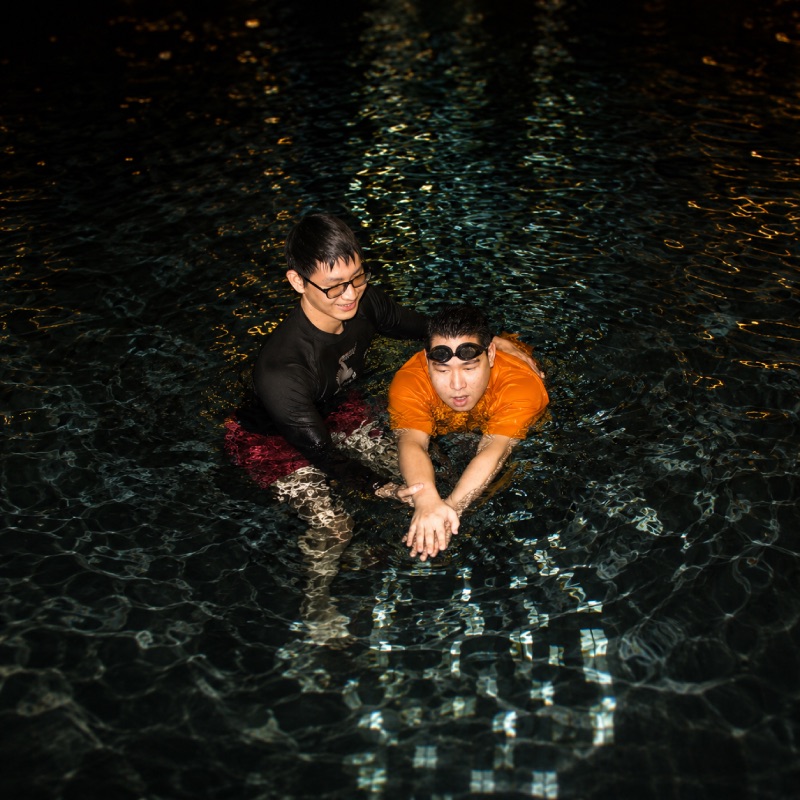
It's Never Too Late To Learn
Some of the most common questions we hear are:
"Maybe I'm too old to learn swimming?"
Or:
"My child has always been afraid of the water. Do you really believe that anyone can learn to swim?"
Over the years, we've learned that neither of those beliefs need to define what happens next.
The human brain is remarkably adaptable.
It is constantly creating, strengthening, and refining connections based on experience.
Scientists call this neuroplasticity.
We simply think of it as the brain's ability to keep learning.
That ability continues throughout life.
Whether it's a three-year-old learning to float, a teenager building confidence, an adult entering the water for the first time, or an eighty-year-old discovering a new skill, the ability to learn remains.
The process may look different for each person, but the ability to learn remains.
The same is true for confidence.
The same is true for fear.
With patience, repetition, encouragement, and the right teaching approach, new patterns can develop and old limitations can begin giving way to new possibilities.
That is one of the reasons we never place limits on what a student can achieve based on age alone.
Because learning does not stop when we get older.
And neither does growth.
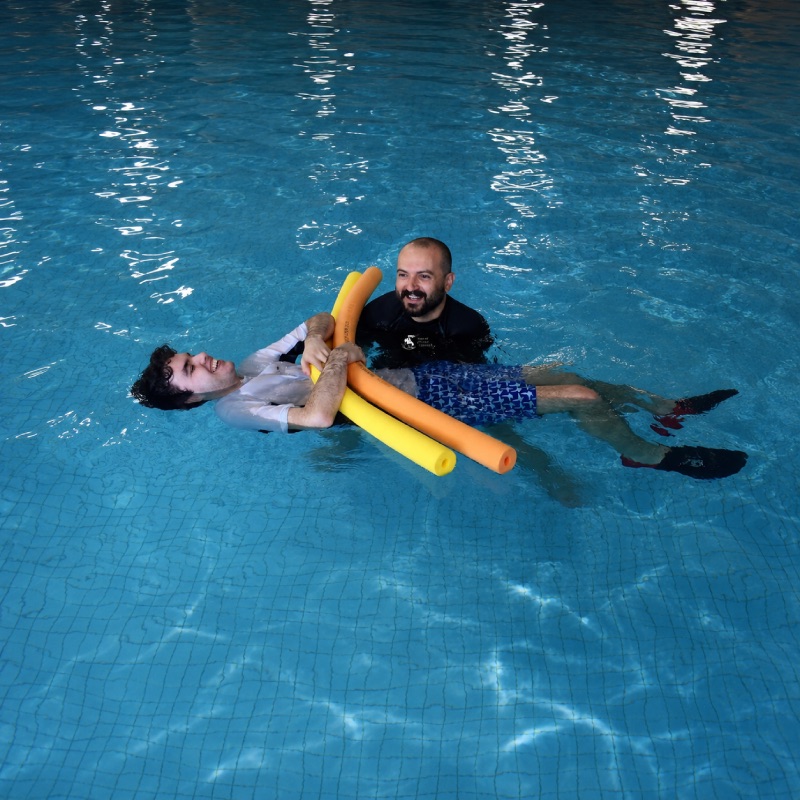
Confidence Before Performance
Some people assume confidence appears after success.
We've often observed the opposite.
Confidence usually begins with small positive experiences that gradually build trust in ourselves.
It might be a child putting their face underwater for the first time.
An adult floating independently for a few seconds.
Or simply a student entering the pool feeling calmer than they did the week before.
To some people, these moments may seem small.
To the student experiencing them, they can feel enormous.
Each success creates a new reference point.
A new memory and a new belief about what might be possible.
Over time, those experiences begin building something powerful:
self-trust.
That is why we focus so heavily on creating positive learning experiences early in the journey.
Not because technique isn't important.
It absolutely is.
But when students feel safe, capable, and encouraged, technique often develops far more naturally.
When students feel confident, they often become more open to learning.
And when they become more open to learning, progress usually follows.
For us, confidence is not the reward at the end of the journey.
It is one of the foundations that helps make the journey possible.
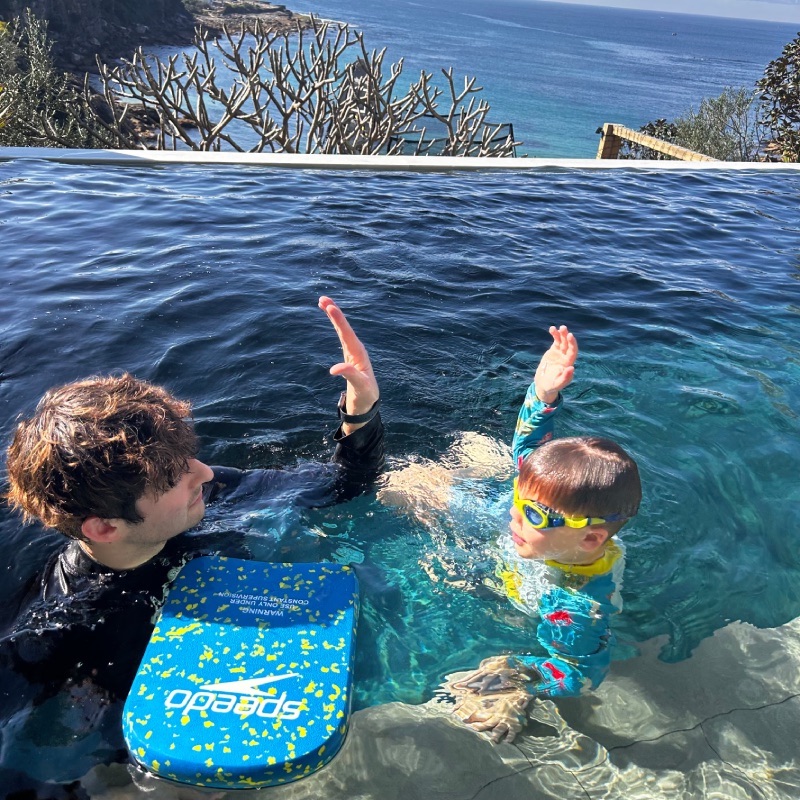
Different Students, Different Pathways
Have you ever noticed how some people learn best by watching, while others need to jump in and experience something for themselves?
The same principle applies in the water.
Over the years, we've observed that students learn in many different ways.
Some are highly visual and benefit from demonstrations.
Some learn best through movement and repetition.
Others enjoy asking questions, talking through ideas, and understanding the "why" behind what they're doing.
Learning styles are only one part of the picture.
Every student also brings a unique personality, pace, confidence level, and relationship with the water.
Some students love trying new things immediately.
Others prefer taking smaller steps before their confidence begins to grow.
Neither approach is right or wrong.
They are simply different.
That is why personalised learning sits at the heart of our philosophy.
We seek to understand how each person learns best and then adapt our teaching to support that journey.
When learning feels natural, students often become more engaged.
That engagement helps build confidence, and over time confidence often leads to stronger progress.
Because there is no single path that works for everybody.
But there is usually a path that works best for each individual.
Questions Create Learning
Many people think teaching is about giving answers.
We see it a little differently.
Sometimes the most powerful learning begins with a question.
Instead of immediately telling students what to do, we often invite them to think, observe, and explore.
"What do you think happened there?"
"Did that feel different?"
"Why do you think that worked better?"
Questions encourage students to become active participants in the learning process rather than passive receivers of information.
This approach has roots in the Socratic method - a style of teaching that uses thoughtful questions to help people discover ideas for themselves.
We've found that when students arrive at an answer through their own observations, the lesson often stays with them much longer.
They become more engaged, more curious, and often more confident in their own ability to learn.
This applies equally to children and adults.
Because learning is often strongest when students are guided toward discovering answers for themselves rather than simply being told what to do.
And sometimes, a single good question can unlock more learning than a dozen instructions.
Sometimes The Student Becomes The Teacher
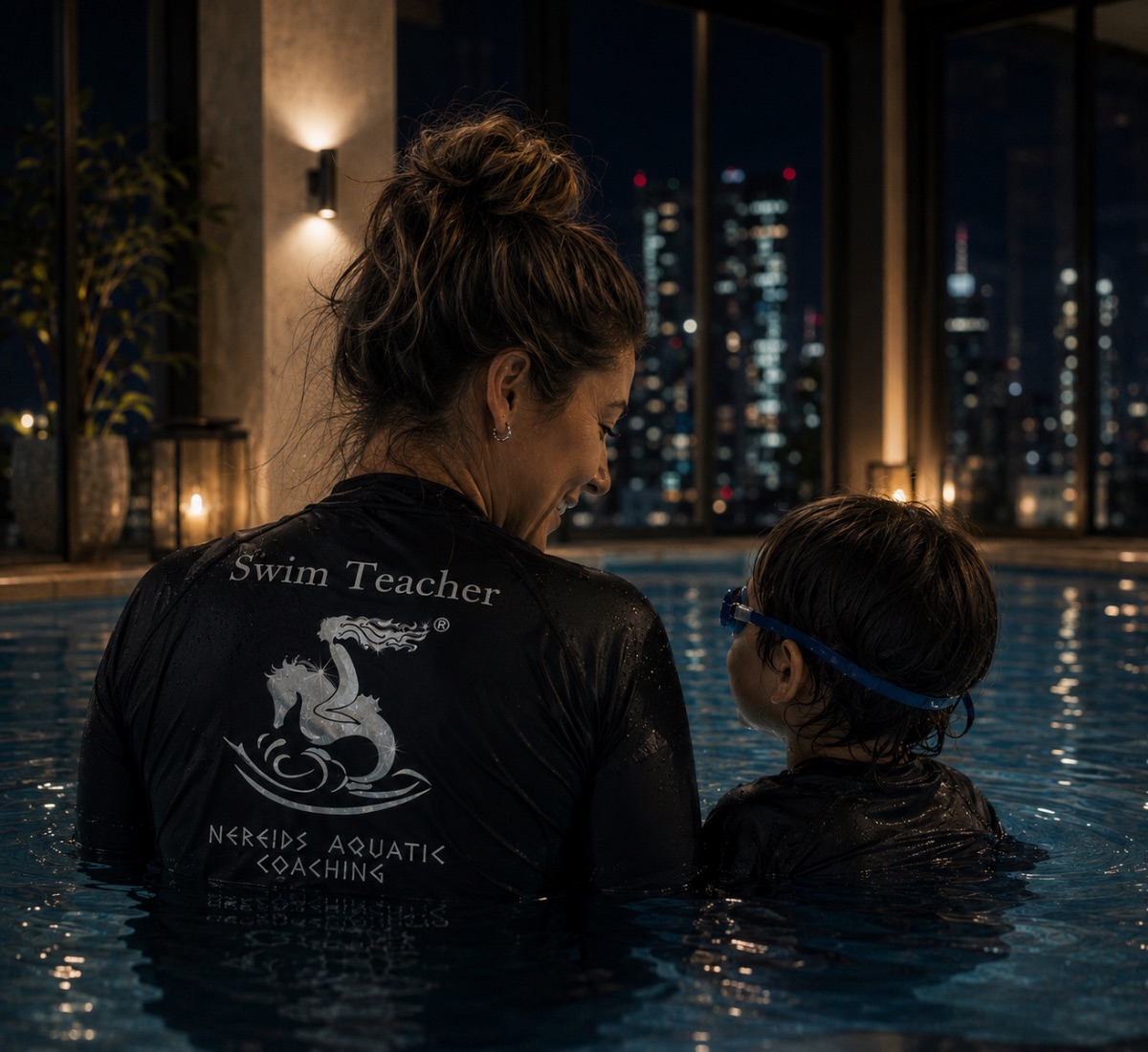
One of the most enjoyable moments in our lessons happens when the roles briefly change.
Instead of teaching, we invite the student to become the teacher.
A swim teacher might deliberately perform a skill incorrectly and then ask:
"Did you notice anything I could improve?"
Suddenly, the student begins observing more carefully, analysing movement and recognising details they may have overlooked before.
And often, they quickly identify the very things they are working on themselves.
What began as a simple game becomes a powerful learning experience.
By teaching, explaining, and giving feedback, students engage with the lesson at a much deeper level.
Their attention increases, their understanding becomes clearer, and their confidence often grows alongside it.
We've seen this approach work beautifully with both children and adults.
Because one of the most effective ways to strengthen learning is not simply to receive information.
It's to actively use it.
Sometimes, becoming the teacher for a few moments helps students realise just how much they already know.
And that realisation can be incredibly empowering.
Learning Should Feel Engaging
Think back to something you learned easily as a child.
Chances are, it wasn't because somebody repeated instructions over and over again.
It was probably because your attention was fully engaged.
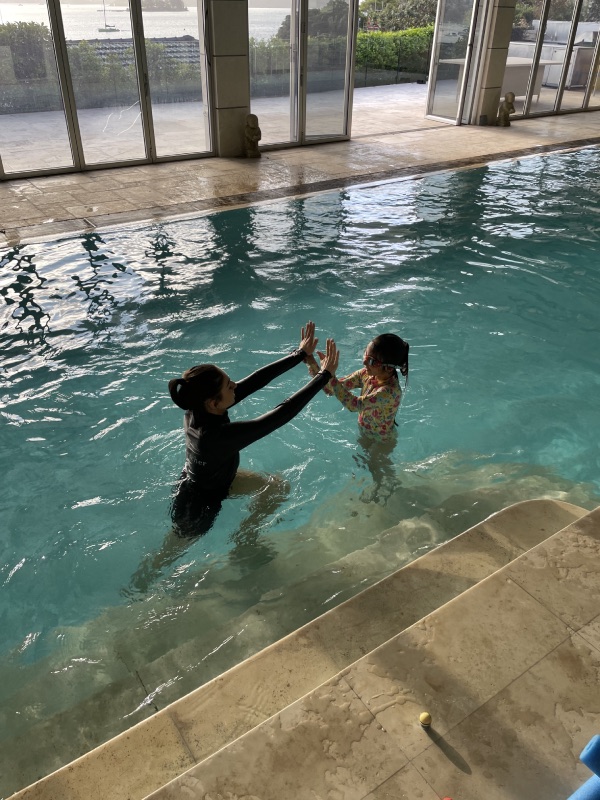
At Nereids, we believe learning becomes far more effective when curiosity, imagination, and enjoyment are part of the experience.
That is why we often use storytelling, visual imagery, games, and creative challenges throughout our lessons.
A young student might imagine becoming a sea guardian on an important mission.
Another might picture themselves swimming like a dolphin, a turtle, or a graceful sea creature moving through the water.
These simple images often help students connect with new skills much more naturally than technical instructions alone.
Stories give the brain something meaningful to hold onto.
They capture attention, create engagement, and help strengthen learning.
Our love of Ancient Greek mythology also finds its way into many parts of the Nereids experience.
Names such as Athena, Triton, Poseidon, and Nereus are not simply program names.
They represent qualities such as courage, growth, confidence, wisdom, and personal development.
Most importantly, they help students connect with the learning experience on a deeper level.
Because when attention, emotion, and imagination work together, learning often becomes both more memorable and more enjoyable.
And when learning is enjoyable, students naturally want to keep progressing.
Words Shape Confidence
The words we hear and the words we tell ourselves, have a powerful influence on how we experience learning.
That is why positive language plays such an important role in our teaching philosophy.
A student might say:
"This is too hard."
Instead of focusing on the difficulty, we may gently reframe it:
"This feels challenging right now."
At first, those two sentences may sound very similar.
But they often create very different responses.
One focuses attention on the obstacle.
The other focuses attention on the opportunity to grow.
Over time, these small shifts in language can help students develop a healthier relationship with challenges, mistakes, and progress.
Rather than viewing obstacles as signs of failure, students begin seeing them as a natural part of learning.
This doesn't mean pretending something is easy when it isn't.
Learning new skills often requires patience, practice, and persistence.
But we believe students grow best when they feel encouraged, supported, and capable of improving.
That applies equally to children learning their first swimming skills and adults stepping outside their comfort zones.
Because confidence is influenced not only by what we do, but also by the way we think and speak about what we are doing.
And sometimes, a small change in language can open the door to a much bigger change in belief.
Water Safety Before Strokes
Swimming strokes are valuable skills.
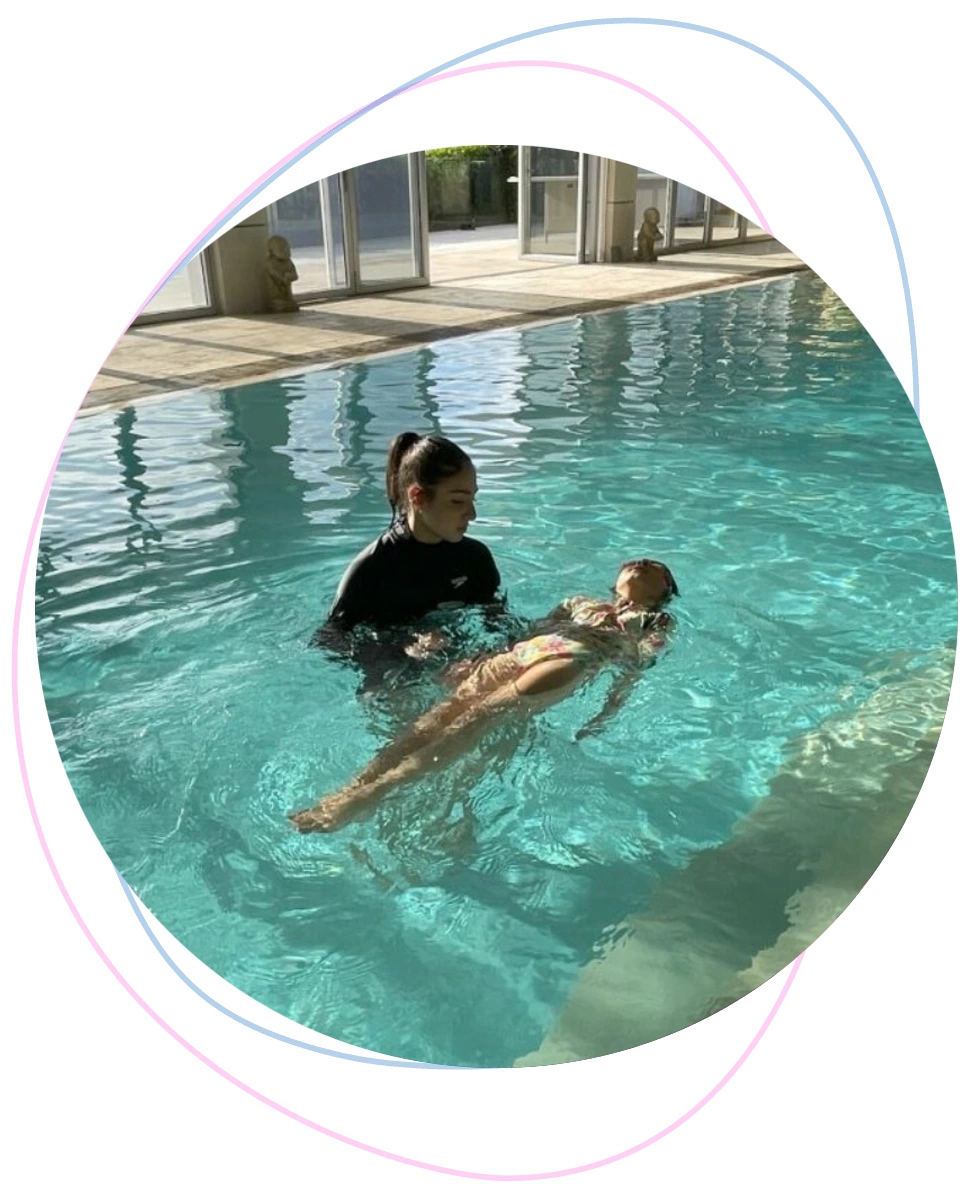
But before students learn how to swim beautifully, we believe they should first learn how to feel safe, capable, and confident in the water.
That is why practical water safety sits at the heart of our teaching philosophy.
For us, water safety is not simply a collection of facts to remember.
It is a set of skills that become familiar through experience and practice.
Depending on the student's age and stage of development, this may include learning how to:
- enter the water confidently
- float and recover calmly
- tread water
- move through the water independently
- return to safety
These skills create a foundation that supports everything else students learn later.
Over time, strokes can be refined and technique can continue improving.
But confidence and practical water awareness create the platform that makes long-term progress possible.
This philosophy has been shaped by years of teaching, lifeguarding experience, and countless conversations with families who simply want their loved ones to feel safer around water.
Because in the end, water safety is not something we memorise.
It's something we practise until it becomes familiar.
And when it becomes familiar, confidence often follows.
Building On What Comes Naturally
One of the most interesting things we've observed over the years is that students often arrive with natural strengths already waiting to be discovered.
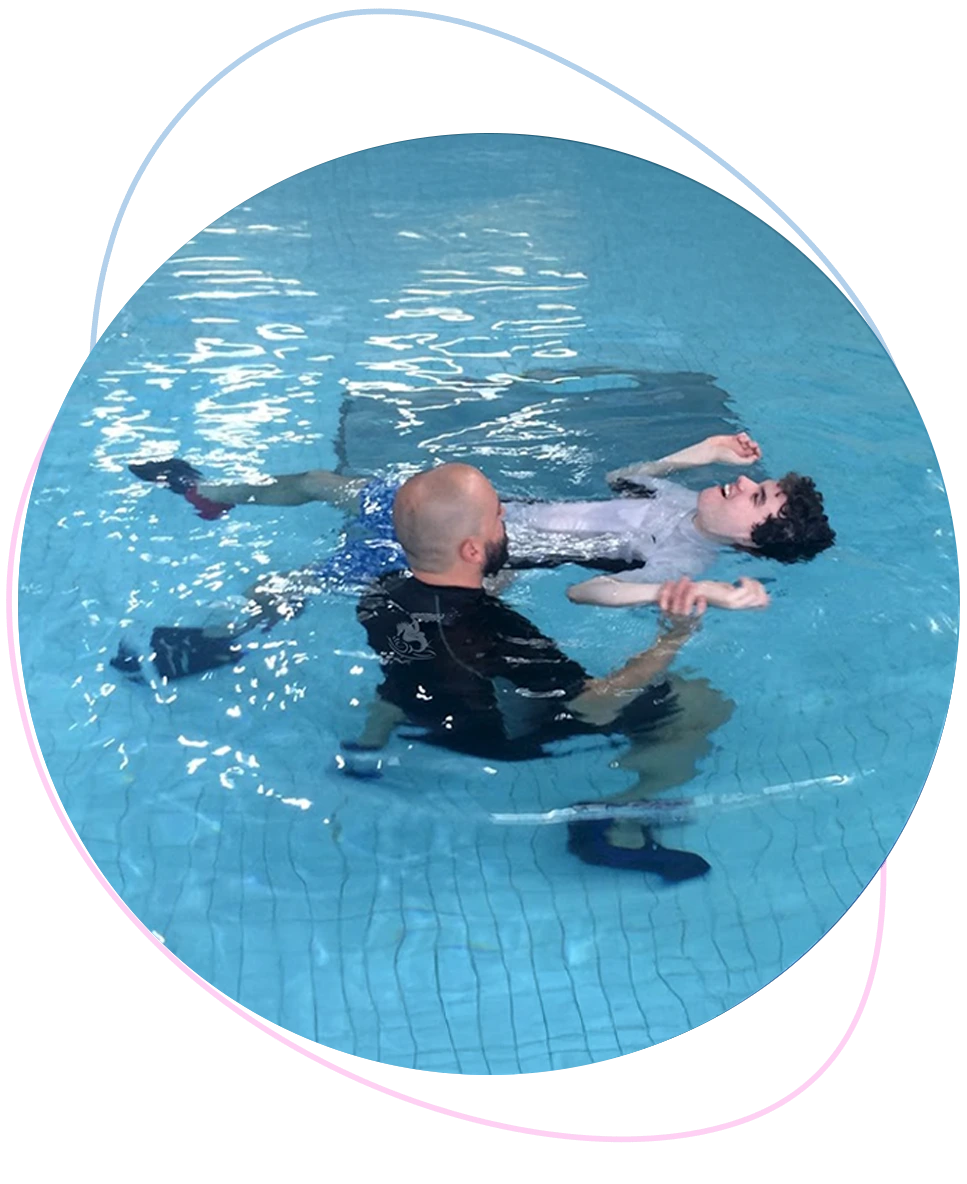
Some students feel comfortable floating on their back.
Others naturally connect with breaststroke movements.
Some develop strong water awareness very quickly, while others show confidence in completely different ways.
Rather than focusing only on what a student cannot do yet, we believe there is tremendous value in recognising what they are already doing well.
Those strengths often become powerful starting points for learning.
When students experience success early, they tend to become more engaged.
That engagement helps build confidence, and confidence often makes new skills easier to develop.
Over the years, we began questioning whether every student truly needed to follow the exact same progression pathway.
What emerged was an interesting pattern.
Some students flourished when lessons began with movements that felt natural to them.
A child who naturally enjoyed breaststroke movements often became more engaged when those strengths were explored early.
Another student might feel more comfortable on their back.
Someone else might develop confidence through entirely different skills first.
These observations reinforced something we had already come to believe:
the most effective pathway is not always the same pathway.
Sometimes confidence grows fastest when teaching begins with the student's strengths and expands from there.
That doesn't mean we ignore important fundamentals or long-term development.
It simply means we remain flexible in how we guide learning and progression.
Every student's journey will be slightly different.
What feels natural for one person may not feel natural for another.
Because sometimes the fastest way forward begins by recognising what is already working.
And then helping students build upon it.
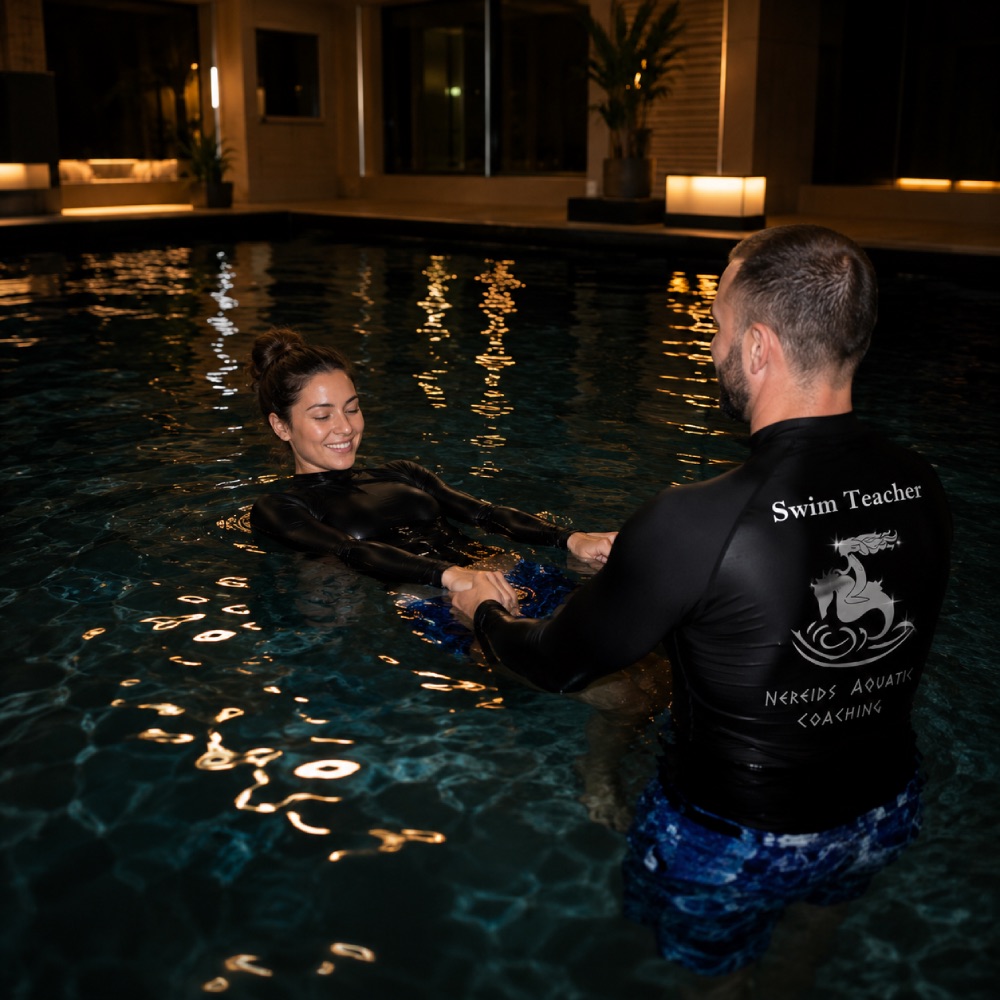
Lessons That Extend Beyond The Water
At first glance, swimming may seem like a purely physical skill.
It's easy to think it's simply about learning how to float, breathe, and move through the water.
Or simply realising they are capable of more than they once believed.
Gradually, those experiences begin extending beyond the pool. But over the years, we've watched countless students develop something much deeper along the way.
We've seen children discover courage by trying something that once felt intimidating.
Adults overcoming fears they had carried for years.
And we've seen students become more independent, resilient, and confident in their own abilities.
Many of these changes begin with small moments.
It might be a student floating independently for the first time.
The confidence to jump into the water on their own.
Students become more willing to try new things.
They develop patience with themselves and confidence in their ability to learn and grow.
Of course, every journey is different.
Not every lesson creates a life-changing moment.
But time and time again, we've seen the skills developed in the water positively influence other parts of life as well.
Because swimming is not only about learning how to move through water.
Sometimes it's also about discovering what you're capable of.
And that lesson can stay with a person long after they leave the pool.
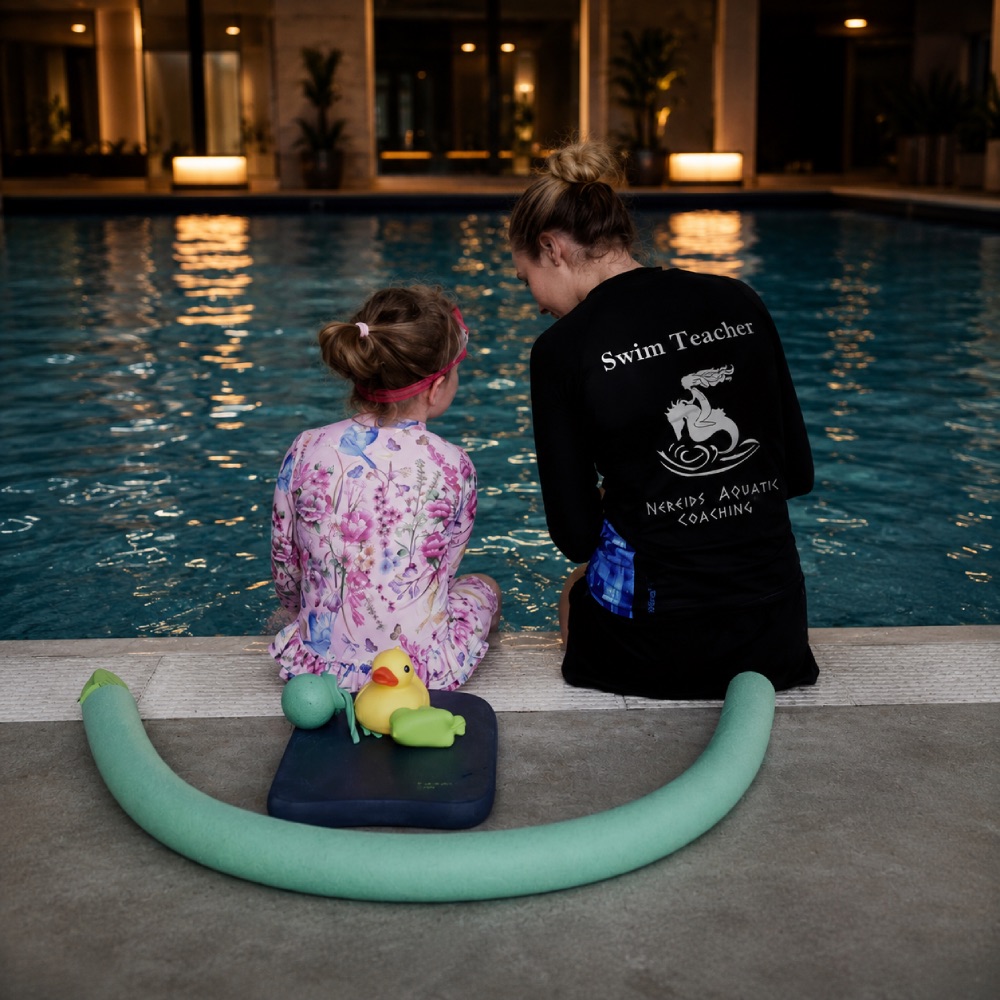
The Nereids Way
Teaching With Care, Curiosity & Respect
Throughout this page, we've explored many of the ideas that shape how we teach.
Confidence.
Water safety.
Personalised learning.
Positive reinforcement.
Curiosity.
Growth.
At first, they may seem like separate pieces.
But for us, they are all connected.
Together, they form the philosophy that guides every lesson we teach and every family we support.
We call it aquatic coaching.
Because our goal has never been simply to teach swimming skills.
Our goal is to help people build confidence, develop practical water safety, and create a positive relationship with the water that can last a lifetime.
That journey will look different for every student.
Some arrive excited and eager to begin.
Others arrive carrying uncertainty, hesitation, or past experiences they are ready to move beyond.
Wherever they begin, our role remains the same:
to understand the individual, support their growth, and help them progress at a pace that feels right for them.
At the heart of our philosophy is a simple belief:
when people feel understood, encouraged, and supported, they often achieve far more than they initially thought possible.
That is the Nereids Way.
And it continues guiding the way we teach, learn, and grow today.